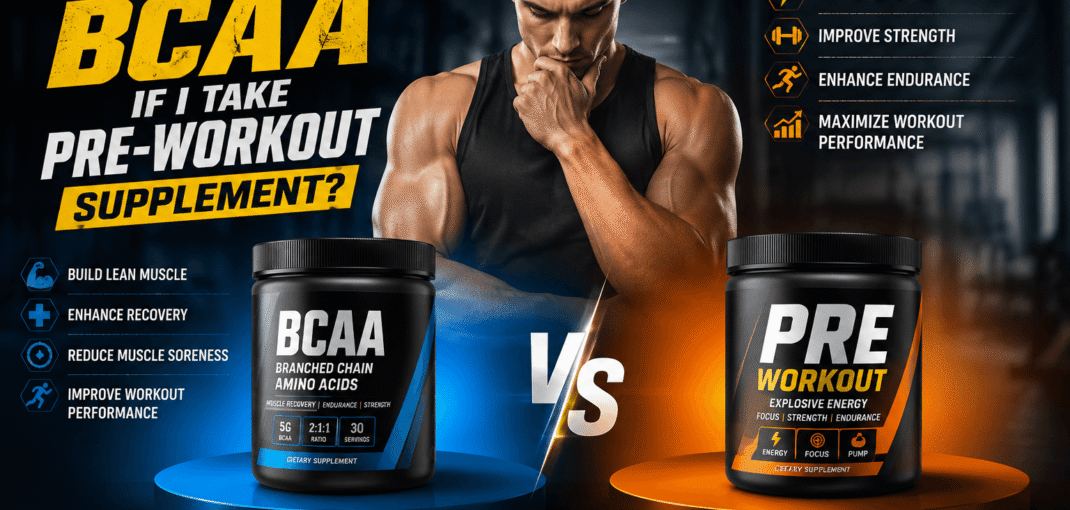
If we already use an exercise supplement, we might be wondering whether an BCAA supplement is necessary. Both supplements are utilized by bodybuilders, athletes and fitness enthusiasts but have different functions and ingredients.
Simply stated, we should not shy away from BCAAs just because they’re part of pre-workout supplements. Their effectiveness depends on factors like our daily protein consumption, eating habits, goals for training and what components may already be present on them.
Knowledge of the differences between pre-workout supplements and BCAAs can help athletes avoid unnecessary supplements while creating an effective diet plan.
What Are BCAAs?
BCAA stands for Branched-Chain Amino Acids. The three BCAAs are:
- Leucine
- Isoleucine
- Valine
These essential amino acids cannot be produced naturally and thus need to be supplemented through food or supplements in our daily lives.
Leucine stands out among them due to its vital role in stimulating muscle protein synthesis in body. BCAAs also available in daily diet with rich in proteins such as dairy products, eggs, fish, meat and poultry as well as in various protein supplements.
BCAA supplements are most often linked with protein metabolism within muscle during recovery, training and nutrition.
What Does a Pre-Workout Supplement Do?
Pre-workout products mainly used to maximize bodybuilding training performance prior to exercise. Their primary ingridient could contain elements such as caffeine or protein supplements;
Caffeine, citrulline malate or beta alanine as well as creatine electrolyte Tyrosine can all support nitric oxide production; their exact formulation varies among products.
Pre-workout supplements usually target goals such as increased energy concentration, fitness performance enhancement and endurance/intensity.
Pre-workout supplementation differs significantly from BCAA supplementation.
Do We Need BCAA If We Take Pre-Workout?
BCAA supplements may not be necessary in those consuming adequate protein from their diet; pre-workout workouts usually provide enough of these amino acids.
If we consume adequate high-quality proteins in our diets, it will likely provide us with enough BCAAs naturally.
One can obtain BCAAs without supplementation through diet alone if consuming sufficient eggs, milk, yogurt fish, chicken lean meat as well as soy foods containing high quality proteins – in other words without needing an external source such as an added BCAA supplement product.
Prior to increasing protein consumption with additional amino-acid supplements, we must evaluate our overall consumption levels first.
When are BCAAs Useful?
There may still be circumstances when someone could benefit from taking BCAAs, including:
Trainers training whilst fasting, eating a low protein diet or struggling to consume sufficient proteins through food may prefer amino-acid drinks with flavors for exercise. Food safety must always come first; in these circumstances the overall diet must come before adding additional BCAA supplements.
BCAA vs Pre-Workout: What’s the Difference?
The major difference is their intended role.
| Supplement | Primary Purpose | Typical Timing |
|---|---|---|
| Pre-Workout | Energy, focus and workout performance | Before training |
| BCAA | Provides branched-chain amino acids | Before or during training |
| Protein Powder | Helps meet daily protein requirements | Any convenient time |
| Creatine | Supports strength and high-intensity performance | Daily |
| Electrolytes | Supports hydration and fluid balance | Before/during/after exercise |
Pre-workout supplements tend to focus on performance-oriented components while BCAAs serve as amino-acid boosters.
One doesn’t necessitate the other.
Should We Take BCAA Before or After Pre-Workout?
Timing our BCAA consumption shouldn’t necessarily be our main consideration – what matters more is meeting nutritional requirements more efficiently overall.
BCAAs can be consumed prior to and during physical training sessions.
If a workout routine already incorporates BCAAs into its regimen, adding another BCAA product might only duplicate their ingredients.
Be certain to read and comply with any labels regarding supplements before mixing any products together.
Example: if our workout routine already contains adequate amounts of amino acids, additional BCAA supplement may not be needed.
Can We Take BCAA and Pre-Workout Together?
Yes, pre-workout and BCAA supplements should generally be consumed together during training sessions without needing to distinguish them as distinct supplements.
Consideration should be paid to how many ingredients are eaten each time.
If your pre-workout contains beta-alanine, caffeine and stimulants as active components, be mindful of how many servings per container you take and avoid stacking products containing ingredients which overlap.
BCAAs follow similar rules. When numerous products contain amino acids, we must calculate total consumption as opposed to presuming more is always better.
Do BCAAs Build Muscle?
BCAAs play an essential part in protein metabolism; however, simply taking BCAAs won’t always lead to greater muscle growth.
Muscle development involves resistance training, complete protein energy intake and recovery as well as progressive overloads.
Leucine plays an essential role in increasing muscle protein synthesis; however, to build muscles it takes all essential amino acids for this process to take place.
Complete protein sources could prove more efficient in terms of providing sufficient levels of essential BCAAs than isolated BCAA supplements alone if food protein levels fall short of requirements.
To effectively gain muscle, the primary objective should be:
Supplementation should provide functional benefits that are practical. Resistance training must be conducted gradually while eating an appropriate total calorie and daily protein intake is sufficient. Sleep quality, recovery and consistent nutrition must also be assured for successful training outcomes.
Is BCAA Better Than Protein Powder?
Additionally, full protein supplements could be an efficient and more sustainable solution than simply depending on BCAAs for protein intake.
Whey protein is the source of 9 amino acids and naturally high concentrations of BCAAs.
Protein powder offer an effective means of meeting daily protein requirements while improving amino-acid.
BCAA supplements may provide many health advantages; however, they should never act as a replacement for complete proteins in your diet.
What If Our Pre-Workout Already Contains BCAAs?
Consideration should be given to this important element of success.
Some workout products contain amino acids or substances meant to aid with training performance and recovery, such as BCAAs. If our exercise regime already includes BCAAs, adding another product might not yield as many tangible advantages.
Before purchasing any supplement, we must consider:
Serve, Ingredient, Amount per Day and Your Requirements
This method may help us forgo unnecessary supplements and save us money in the process.
Do BCAAs Help With Workout Recovery?
BCAAs are currently being studied to see their potential effect on sore muscles caused by exercise or injury, and for recovery. Their benefits will ultimately depend on an individual’s food intake and overall health status.
Anyone consuming enough quality protein may already be getting plenty of BCAAs through their diet.
Recovery shouldn’t be limited to one supplement.
An effective recovery program includes adequate protein consumption, carbohydrates as necessary and sufficient hydration as well as sleep rest and appropriate training intensity.
Who May Consider BCAA Supplementation?
BCAA supplements could be beneficial to individuals looking for:
Doing long exercise training while fasting may help with digesting proteins more easily when training, so be sure to opt for diets containing minimal proteins and drink amino-acid supplements during your workouts.
Are You Searching for an Easy Drink for Workouts? Before selecting any beverage or food item that would best benefit your workout, we should first evaluate if a complete source of protein or balanced diet would provide more benefits.